The Iberian Calculation: Auditing Portugal as an Atlantic Gateway Against Rotterdam and Algeciras
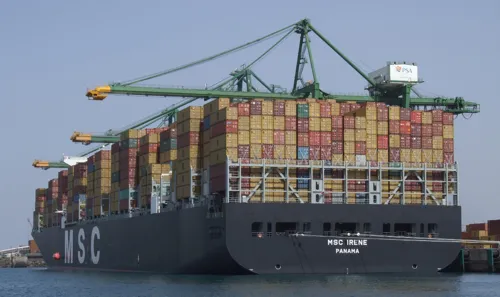
Photo: APS, CC BY-SA 4.0, via Wikimedia Commons
For most US export teams, the European gateway shortlist has two names on it before the meeting starts: Rotterdam and Algeciras. Portugal enters the conversation, if it enters at all, as a tourism destination or a nearshoring footnote. That is a modeling failure rather than a verdict on Portugal's merits. The relevant question is not which port is largest. It is which port produces the lowest total landed cost and the fewest compliance surprises on a specific lane, for a specific cargo, on a specific schedule.
The Default Shortlist and Its Blind Spot
Rotterdam earns its place. It offers frequency, a dense feeder network into the Baltic and North Sea, mature customs processes, and a hinterland rail system that reaches Central Europe with predictable transit times. Algeciras earns its place differently: it is a transshipment machine with strong connections into North Africa and the Western Mediterranean. Neither advantage is imaginary.
Both also concentrate cost in ways that US shippers rarely unpack. Rotterdam's congestion surcharges, terminal dwell, and feeder legs add up on cargo that is not destined for the Benelux. Algeciras routes much of its value through alliance-dependent transshipment, which means schedule reliability can shift when a carrier reshuffles its network. The blind spot is not that these gateways are weak. It is that Portugal's ports are almost never scored against them in the same model.
What Portugal Actually Offers
Portugal's gateway case rests on four operational facts, not on a slogan.
The first is deep water at Sines. The port handles large Atlantic container classes without the tidal windows that constrain some competing terminals, which matters for vessel planning and for berth reliability. Direct transatlantic calls exist, though they are not universal across carriers or seasons. That qualification is important. Sines is not Rotterdam, and it does not pretend to be.
The second is a set of complementary ports rather than a single bet. Lisbon sits closer to consumer markets and offers a river terminal with urban distribution access. Leixões anchors the industrial north. Together they give an exporter options that a single-port strategy does not, including the ability to split flows by final market rather than by carrier convenience.
The third is bonded infrastructure inside the EU customs perimeter. Portugal offers bonded warehousing, customs procedures consistent with EU rules, and authorized economic operator status for qualified operators. For a US exporter that wants to hold inventory in Europe before final sale, the question is not whether bonded storage exists. It is whether the combined cost of storage, labor, and inland transport beats the Dutch or Spanish alternative on a per-unit basis. In many cases it does, particularly for southern European destinations and for Lusophone markets.
The fourth is legal and linguistic continuity. Portugal's legal and customs documentation environment is familiar to operators in Brazil, Angola, Cape Verde, and Mozambique. That familiarity is not cosmetic. It shortens the translation and review cycle for commercial documents, reduces the frequency of documentary discrepancies, and gives US exporters a European base from which Lusophone market entry can be coordinated by teams that already understand the destination regime. For Brazil in particular, where import complexity is a recurring cost center, a Portuguese intermediary layer can be worth more than a marginally faster ocean leg.
Where the Gateway Claim Breaks
A clear-eyed comparison has to include the failures. Portugal has fewer direct transatlantic strings than Rotterdam, which means some cargo will move through a feeder or a transshipment anyway. That can add three to seven days depending on routing, and it reintroduces the schedule variability the shipper was trying to avoid. Inland distance to Central European markets is longer by road and rail than from Rotterdam, even as rail links improve. Port capacity and terminal choice at Sines are not unlimited, and carrier rotation changes can alter the direct-call picture from year to year.
Portugal is therefore not a blanket replacement for Rotterdam. It is a candidate for specific lanes: southern European distribution, Lusophone markets, and North African flows where Algeciras is congested or where a Portuguese consolidation point improves documentation control.
A Four-Line Cost Model
US trade teams should score gateways on four lines rather than on port reputation. The first is ocean freight to the gateway. The second is port dwell and terminal charges. The third is inland or feeder movement to the final market. The fourth is compliance friction, which includes document review time, customs broker coordination, and the cost of corrections.
Run the model for a US East Coast origin to a Paris warehouse, a Madrid warehouse, and a São Paulo import flow. The results will not be uniform. Rotterdam will often win the Paris lane on frequency. Algeciras will often win the North Africa transshipment lane on network density. Portugal will win where the combination of southern European proximity, bonded storage, and Lusophone documentation continuity reduces total cost rather than just ocean cost.
Test Before You Switch
The practical recommendation is not to relocate a European supply chain on the strength of a gateway narrative. It is to put Portugal into the next lane-level RFP as a scored alternative. Ask forwarders for routing options through Sines, Lisbon, and Leixões. Ask customs brokers about bonded flows and document review timelines. Ask the carrier whether the direct call is seasonal or structural. Then compare the four cost lines against the existing gateway.
A gateway is a operational choice, not a marketing position. Portugal's Atlantic position is real. Whether it belongs in a US exporter's network depends on the lane, the cargo, and the destination. The first step is to stop leaving it out of the model.