Your Subsidiary Made It. Your Customs Bill Doesn't Care.
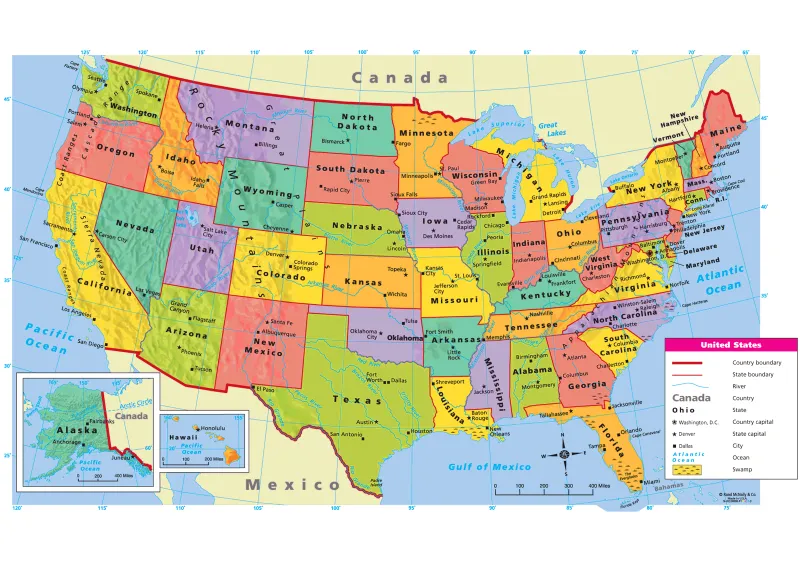
For many US manufacturers, the logic of regional expansion seemed airtight. Establish production capacity in Mexico, Colombia, or Brazil. Benefit from lower labor costs and proximity to raw material sources. Ship finished or semi-finished goods back to the United States under the preferential tariff rates embedded in trade agreements like USMCA or the various bilateral frameworks governing trade with South American partners. Capture margin. Scale efficiently.
The reality, for a growing number of companies, is considerably more complicated.
Across industries—from automotive components to consumer electronics to processed agricultural goods—US multinationals with wholly owned subsidiaries in the Americas are absorbing tariff bills they were never supposed to pay. Not because they are importing from unaffiliated third parties. Not because they have circumvented any rules. But because the gap between how trade agreements are written and how customs authorities actually enforce them is wider, and more expensive, than most corporate legal teams initially anticipate.
The Agreement Says One Thing. The Port of Entry Says Another.
Trade agreements within the Americas are, in principle, designed to reward integrated supply chains. USMCA, for instance, explicitly acknowledges the reality of cross-border manufacturing by establishing product-specific Rules of Origin (ROO) that define what percentage of a product's value or transformation must occur within the treaty zone to qualify for preferential treatment. Similar frameworks govern US trade relationships with Chile, Peru, Colombia, and Panama, among others.
The problem is not the intent of these agreements. The problem is the evidentiary burden placed on importers to prove compliance—and the interpretive latitude that Customs and Border Protection (CBP) and its counterpart agencies exercise when they review that documentation.
Consider a scenario that has become increasingly common: a US company's Mexican subsidiary assembles electronic components using inputs sourced partly from Asia and partly from within North America. The finished product is shipped to the US parent. On paper, the assembly process may meet the relevant tariff shift or regional value content threshold. In practice, if the supporting documentation—bills of materials, supplier declarations, cost breakdowns, manufacturing records—does not precisely satisfy CBP's current interpretation of the applicable ROO, the preferential rate is denied. The company pays the most-favored-nation (MFN) tariff instead.
For a company moving high volumes of product across the border, the difference between a preferential rate of zero or two percent and an MFN rate of five to fifteen percent is not a rounding error. It is a material margin compression that compounds with every shipment.
Where Intra-Company Transfers Create Unique Vulnerabilities
Arm's length transactions between unrelated buyers and sellers tend to generate cleaner documentation trails. Each party has independent incentives to ensure the paperwork is accurate and complete. Intra-company transfers, by contrast, often rely on internal systems, intercompany pricing arrangements, and consolidated record-keeping practices that were designed for accounting efficiency—not customs compliance.
This creates several specific vulnerabilities.
First, transfer pricing documentation and customs valuation documentation are frequently maintained by different teams with different objectives. The value declared for customs purposes must reflect the transaction value of the goods, but where related-party pricing is involved, CBP has the authority to scrutinize whether that value has been influenced by the corporate relationship. Discrepancies between what the finance team records and what the trade compliance team submits can trigger audits, penalties, and retroactive duty assessments.
Second, Rules of Origin qualification is not a one-time determination. It must be verified on a shipment-by-shipment basis, or through blanket certifications that are themselves subject to periodic audit. When a subsidiary modifies its production process, changes a supplier, substitutes a component, or shifts sourcing to accommodate demand fluctuations, the ROO analysis must be revisited. In fast-moving operations, that discipline is frequently absent.
Third, the documentation required to support a preferential tariff claim—particularly under USMCA's self-certification model—places the burden squarely on the importer of record. If a CBP inquiry reveals that the certification of origin was issued without adequate underlying evidence, the importer faces not only the back duties but potential penalties for negligent or false claims.
The Structural Misalignment Most Companies Miss
Beyond documentation, there is a deeper structural issue that deserves attention. Many US companies designed their regional operating models during a period of relatively stable trade policy and relatively predictable customs enforcement. The assumption, often implicit, was that being a US company with a US parent and US-domiciled operations at either end of the supply chain would afford a degree of institutional goodwill at the border.
That assumption has not aged well. CBP enforcement posture has tightened considerably over the past several years, driven by a combination of policy priorities, interagency coordination, and increased use of data analytics to flag anomalies in preferential tariff claims. Companies that were never formally audited under a more permissive enforcement environment are now receiving CF-28 requests for information and CF-29 notices of action with increasing frequency.
For companies with substantial intra-Americas trade flows, the financial exposure is not hypothetical. It is retrospective, present, and prospective simultaneously.
What Restructuring Actually Looks Like
Addressing this exposure requires action on several fronts, and the sequencing matters.
The starting point is a comprehensive ROO audit across all preferential tariff claims made in the past three to five years. This is not simply a documentation review. It requires tracing the actual production inputs, supplier origins, and cost structures against the specific ROO criteria applicable to each product. Where gaps are identified, companies must assess whether voluntary prior disclosure to CBP is appropriate—a step that, while uncomfortable, typically results in substantially reduced penalties compared to a CBP-initiated audit finding.
Prospectively, companies should invest in aligning their transfer pricing and customs valuation teams. The intercompany pricing methodology must be stress-tested against customs valuation rules, and any divergences documented with a clear, defensible rationale. This is particularly important for companies operating under advance pricing agreements or cost-sharing arrangements that were structured without customs implications in mind.
At the operational level, supplier change management protocols need to incorporate an automatic ROO re-qualification trigger. Any modification to a bill of materials, any new vendor onboarding, any shift in sourcing geography should initiate a formal review before the next shipment—not after CBP asks about it.
Finally, companies should evaluate whether their current corporate structure in the Americas is genuinely optimized for the trade agreements available to them, or whether it was designed for a different regulatory and enforcement environment. In some cases, modest restructuring of where certain manufacturing steps occur—or where title to goods transfers—can meaningfully improve ROO qualification without disrupting the underlying business logic.
The Paradox Is Solvable, but Only If You Acknowledge It
The deeper irony of the intra-Americas tariff problem is that the companies most exposed are often those that invested most seriously in regional integration. They built the subsidiaries. They established the supply chains. They made the long-term bets on hemispheric manufacturing. And now they are paying duties on goods they effectively made themselves, because the compliance infrastructure never kept pace with the operational ambition.
Trade agreements across the Americas remain among the most favorable frameworks available to US manufacturers. The preferential rates are real. The regional value content thresholds are achievable. But achieving them consistently, at scale, across an integrated corporate structure, requires a level of trade compliance rigor that most companies have historically underinvested in.
The tariff bill does not care who owns the factory. The documentation has to prove it.