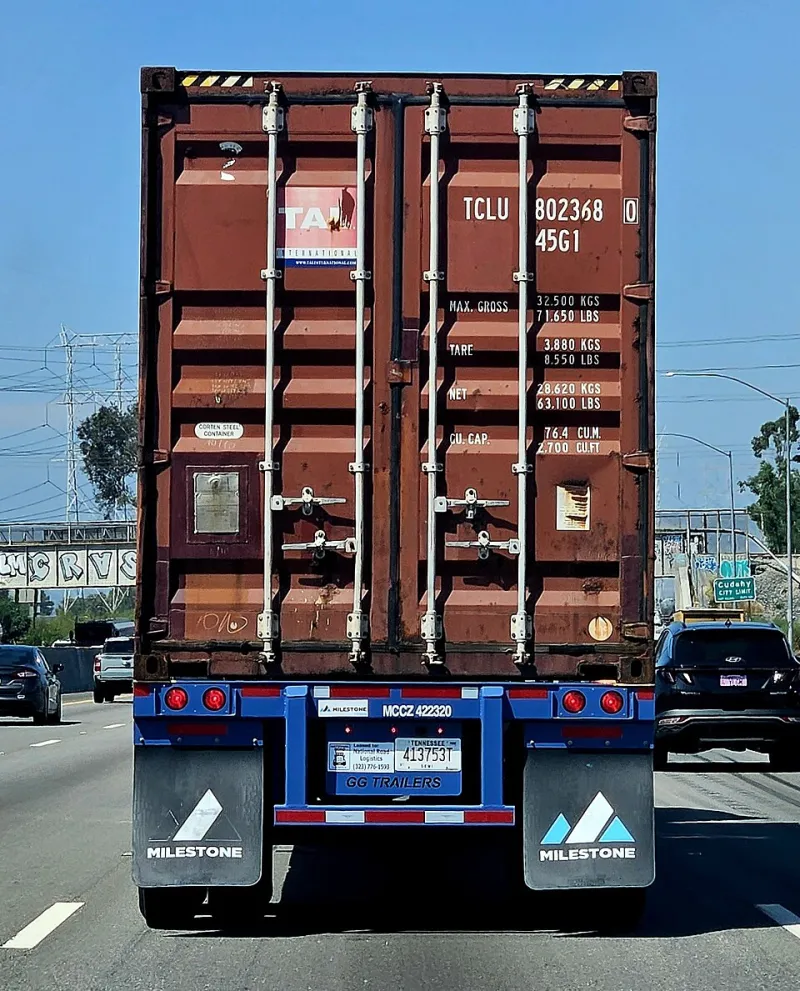
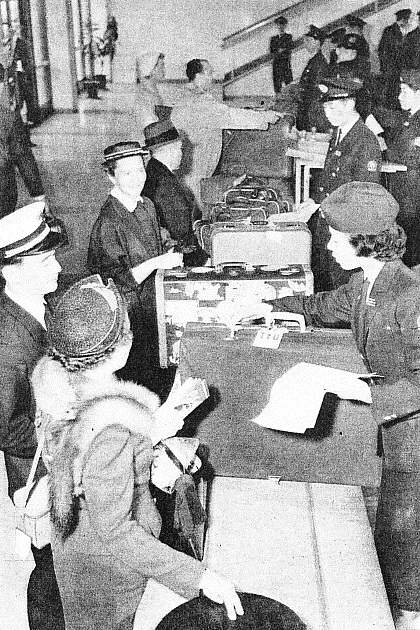
The Cost Nobody Budgeted For: How Reverse Logistics Is Quietly Eroding US Importer Margins
Photo: Unknown authorUnknown author, Public domain, via Wikimedia Commons
Ask any US importer to walk you through their landed cost model and you will hear a practiced recitation: ocean freight, port fees, customs duties, drayage, warehousing. It is a well-rehearsed calculation, refined over years of procurement cycles and carrier negotiations. What that same importer will rarely mention—and often cannot quantify—is what happens when a portion of those goods come back.
Reverse logistics has long occupied a secondary position in supply chain planning. It is treated as an operational footnote rather than a financial variable of consequence. That assumption is costing US importers more than most of them realize.
The Asymmetry Built Into Every Shipment
The economics of forward and reverse logistics are fundamentally mismatched. When goods move outbound from a manufacturer in Vietnam or a distribution hub in Portugal toward a US fulfillment center, they travel in consolidated volumes, under negotiated rates, with documentation that has been prepared and reviewed. The per-unit cost is minimized through scale.
Returns operate under almost none of those conditions. They arrive in fragmented quantities, at unpredictable intervals, often without standardized packaging or accurate item-level data. Carriers do not offer the same rate structures for return flows. Customs treatment for reimported goods introduces its own layer of complexity, particularly when products have been partially used, altered, or repackaged by the end customer.
The result is a cost structure that bears little resemblance to the original inbound calculation. Studies across e-commerce and retail sectors have consistently shown that the fully loaded cost of processing a return—including transportation, inspection, repackaging, restocking or disposal, and associated labor—can range from 20 to 65 percent of the original item value, depending on the product category and handling requirements. For lower-margin goods, that range is not a footnote. It is a structural threat.
Where the Calculation Goes Wrong
The most common failure is definitional. Most importers calculate their cost of goods without incorporating return probability as a weighted variable. If a product category carries a 15 percent return rate and the average return processing cost equals 40 percent of unit value, the effective landed cost of every unit shipped is materially higher than the model suggests. That delta does not disappear—it surfaces in margin reports, often misattributed to freight volatility or warehousing inefficiency.
A second failure point is contractual. Return protocols with overseas suppliers are frequently underdeveloped or absent entirely. When defective goods or misshipments require repatriation to the origin country, the commercial and logistical terms governing that process—who bears the freight cost, how duties are handled, what documentation is required—are often negotiated in the middle of a crisis rather than established in advance. That reactive posture is expensive.
Third, disposition strategy is rarely optimized. When returned goods cannot be resold as new, the default response in many organizations is either liquidation at steep discounts or disposal. Both outcomes destroy value that, with planning, could be partially recovered through refurbishment programs, secondary market channels, or return-to-vendor agreements that shift reprocessing costs back to the manufacturer.
Auditing the Reverse Flow
Recovering margin from reverse logistics begins with visibility. Before any process change is possible, importers need a clear accounting of what their return flows actually cost—not the surface-level freight line, but the fully loaded expense including labor, repackaging materials, re-inspection time, storage of returned inventory, and the opportunity cost of capital tied up in goods that are neither sellable nor disposed of.
A practical audit framework should address four dimensions:
Return rate by SKU and category. Aggregate return rates obscure the distribution. A single product category with a 40 percent return rate can dominate total reverse logistics cost while appearing manageable in blended figures. SKU-level analysis routinely reveals that a small number of items are responsible for a disproportionate share of return volume and associated costs.
True per-unit return cost. This requires capturing all cost elements—not just outbound return freight, but inbound processing, condition assessment, disposition routing, and any re-fulfillment expenses. Many organizations have never performed this calculation at the unit level. Those that do are frequently surprised by the result.
Supplier contract terms. Every supplier agreement should be reviewed for return and defect provisions. Where terms are vague or absent, renegotiation is warranted. Specifically, agreements should address defect thresholds that trigger supplier-funded returns, repatriation cost responsibility, and acceptable timelines for credit issuance or replacement shipment.
Disposition pathway efficiency. For goods that cannot reenter primary inventory, what alternatives exist? Refurbishment programs, certified pre-owned channels, B2B liquidation platforms, and charitable donation programs each carry different financial and operational implications. A mapped disposition decision tree—applied consistently rather than case by case—reduces the cost and delay associated with ad hoc decisions.
Negotiating Better Return Protocols
The most durable margin protection comes from structural improvements to return agreements, both with suppliers and with logistics providers.
On the supplier side, the goal is to shift more of the financial consequence of defective or misshipped goods back to the origin party. This requires clear contractual language around defect definitions, inspection rights, and cost allocation—provisions that many US importers have historically been reluctant to push for, particularly when sourcing from suppliers where the commercial relationship feels fragile. That reluctance has a cost.
On the carrier and 3PL side, return logistics volumes are negotiable in ways that many importers have not explored. Carriers will offer preferential rates on reverse flows when the volume commitment is credible and the shipment characteristics are well-defined. Third-party logistics providers with dedicated returns processing capabilities can often handle disposition more cost-effectively than in-house operations, particularly for importers whose return volumes are not large enough to justify dedicated internal infrastructure.
The Strategic Reframe
Reverse logistics is not a peripheral concern. For any importer operating in categories with meaningful return rates—consumer electronics, apparel, furniture, home goods—it is a core cost driver that belongs in the same analytical conversation as inbound freight strategy.
The companies that are managing this well share a common characteristic: they have stopped treating returns as an exception to be handled and started treating them as a predictable, plannable cost element with its own optimization levers. That reframe changes the questions being asked, the contracts being negotiated, and the systems being invested in.
For US importers still operating with reverse logistics as an afterthought, the margin recovery opportunity is significant. The first step is simply deciding to look at it clearly—and to count every dollar, in both directions.