From Paper Trails to Proof of Work: How Blockchain Is Rewriting the Rules of US Customs Clearance
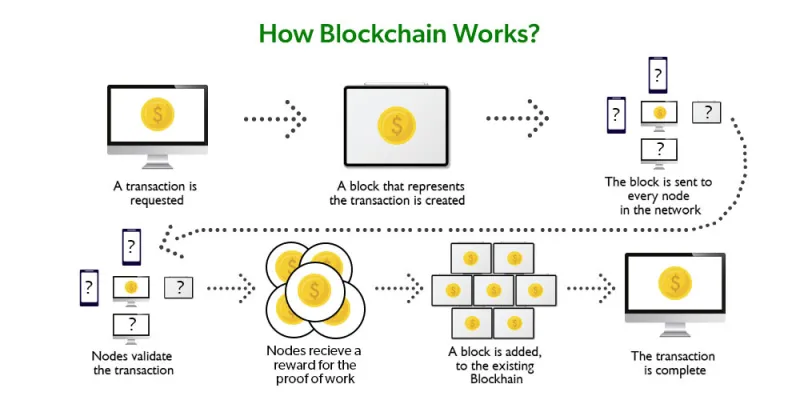
Photo: blockchain technology supply chain logistics digital customs documentation, via image.coinbureau.com
For decades, the movement of goods across US borders has been accompanied by an ungainly procession of paperwork — bills of lading, certificates of origin, commercial invoices, packing lists, and customs declarations, each generated by a different party, each susceptible to error, delay, and fraud. The system functions, but only barely, and at enormous cost to the importers, freight forwarders, and customs brokers who navigate it daily.
Blockchain technology — and more specifically, the application of distributed ledgers to trade documentation — is beginning to change that calculus. The transformation is not yet complete, nor is it without friction. But for US businesses engaged in cross-border commerce, the trajectory is clear enough to warrant serious attention.
The Problem Blockchain Is Actually Solving
Before examining the technology itself, it is worth naming the precise inefficiencies it targets. US Customs and Border Protection (CBP) processes millions of entry filings annually. A meaningful portion of those filings contain errors, inconsistencies, or gaps that trigger manual review, delay cargo release, and generate compliance risk for importers of record.
The root cause is structural: trade documentation is produced in silos. A manufacturer in Vietnam generates a commercial invoice using one system. A freight forwarder in Rotterdam issues a bill of lading on another. A customs broker in Los Angeles prepares the entry summary from a third. Each handoff introduces the possibility of transcription error, document tampering, or simple miscommunication. By the time cargo reaches a US port, the paper record may bear little resemblance to the physical shipment.
Distributed ledger technology addresses this by creating a single, shared, tamper-evident record of a shipment's journey — one that all authorized parties can write to and read from in real time, and that no single party can unilaterally alter. Every update is cryptographically timestamped. Every participant in the chain is accountable.
Early Adopters and What They Are Learning
The most visible blockchain initiatives in global trade have emerged from industry consortia rather than government mandates. TradeLens, the platform developed jointly by IBM and Maersk, represented the most ambitious attempt to digitize global container shipping on a distributed ledger. Though TradeLens was ultimately discontinued in 2022 due to insufficient industry-wide adoption, its operational period generated valuable proof-of-concept data — and its lessons have informed successor efforts.
More durable progress has come from narrower, more focused deployments. Several major US retailers have implemented blockchain-based provenance tracking for food supply chains, enabling near-instant traceability from farm to distribution center. In the pharmaceutical sector, the Drug Supply Chain Security Act has accelerated blockchain adoption for serialization and verification, with compliance deadlines now driving real investment.
On the customs side, CBP has participated in pilot programs exploring how blockchain-verified certificates of origin could streamline trade agreement eligibility determinations — a process currently prone to fraud and difficult to audit at scale. The results have been encouraging, though pilots remain pilots.
Smart Contracts and the Automation of Compliance
Perhaps the most consequential application of blockchain in trade is not documentation storage but smart contract execution. A smart contract is a self-executing program that lives on a distributed ledger and automatically performs predefined actions when specified conditions are met.
In a trade finance context, this means a letter of credit could release payment automatically the moment a blockchain-verified bill of lading confirms cargo has been loaded — eliminating the days-long manual verification process that currently governs most documentary credit transactions. In a customs context, a smart contract could pre-validate entry data against CBP requirements before a shipment even departs its origin country, flagging discrepancies while there is still time to correct them.
For US importers, the practical implication is significant: fewer holds, faster release, and reduced exposure to penalties for inadvertent filing errors.
Regulatory Barriers That Remain
Despite the technology's promise, mainstream adoption faces genuine headwinds. The most significant is regulatory recognition. US customs law was not written with distributed ledgers in mind. For blockchain-generated trade documents to carry legal weight in a CBP proceeding, the regulatory framework must explicitly acknowledge them — a process that moves at legislative, not technological, speed.
Interoperability presents a second challenge. The global trade ecosystem involves hundreds of countries, thousands of carriers, and tens of thousands of freight intermediaries, each operating on different systems. A blockchain platform that works seamlessly between a US importer and its Taiwanese supplier may be incompatible with the port authority in Kaohsiung or the customs authority in Rotterdam. Without agreed-upon data standards, the network effect that makes distributed ledgers powerful cannot fully materialize.
Finally, there is the question of trust and data sovereignty. Some trading partners — particularly state-owned enterprises in certain markets — are reluctant to share shipment data on platforms they do not control. Convincing them that a decentralized ledger serves their interests requires diplomatic as much as technical persuasion.
A Realistic Timeline for American Importers
Industry analysts who have tracked blockchain adoption in trade finance and logistics consistently describe the current moment as a transition from experimentation to selective deployment. Full-scale, end-to-end blockchain customs clearance for the average US importer is likely still five to ten years away as a mainstream reality. However, meaningful advantages are available today for companies willing to engage with the technology on specific, well-defined use cases.
Certificates of origin verification, pharmaceutical track-and-trace, and trade finance document management are the most mature applications. Companies importing under free trade agreements — USMCA in particular — stand to benefit most immediately from blockchain-based origin documentation, given how frequently origin claims are audited and disputed.
For US businesses evaluating logistics and customs partners, the relevant question is not whether your freight forwarder has a blockchain strategy, but whether your integrated logistics provider participates in any recognized digital documentation initiative and whether their systems can connect to the platforms your trading partners are adopting.
What Forward-Looking Businesses Should Do Now
The companies that will transition most smoothly to blockchain-enabled customs clearance are those that begin preparing their data infrastructure today. That means digitizing and standardizing internal trade documentation, auditing the quality of data that flows from suppliers and carriers, and establishing relationships with customs brokers who are actively engaged in digital trade initiatives.
It also means engaging with the policy conversation. Industry associations including the National Customs Brokers and Forwarders Association of America (NCBFAA) and the American Association of Exporters and Importers (AAEI) are actively participating in discussions with CBP about the regulatory path forward. Companies that contribute to those conversations are better positioned to shape standards that serve their operational reality.
The border is not disappearing. But the paper that has defined it for generations is beginning to give way to something more durable, more transparent, and considerably more efficient. For US importers, the question is not whether to engage with that shift — it is how soon.