Island Advantage: How the Caribbean Is Rewriting the Rules of US Nearshore Logistics
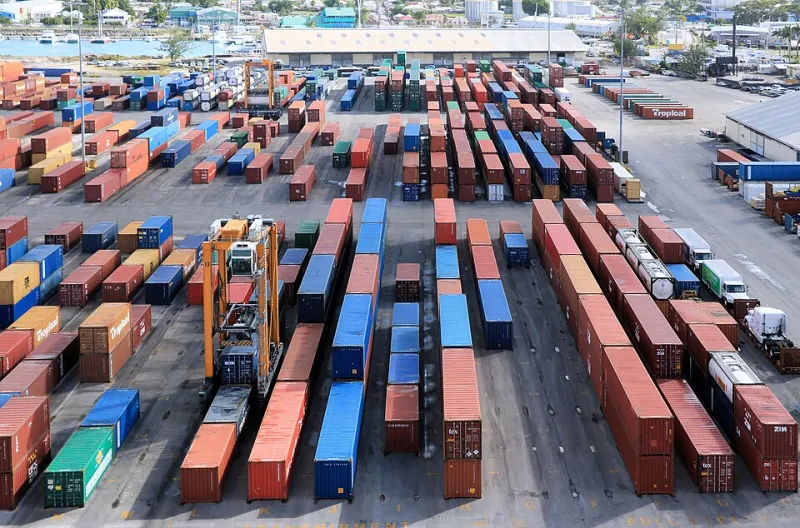
Photo: Paul Harrison, CC BY-SA 4.0, via Wikimedia Commons
For the better part of three decades, the calculus for US sourcing executives was relatively straightforward: head east, toward Asia, where labor costs were low and manufacturing capacity was seemingly limitless. That calculus is now under significant strain. Tariff escalations, pandemic-era port congestion, and a renewed appetite for supply chain resilience have forced a fundamental reassessment. Increasingly, the answer is not halfway around the world—it is a few hundred miles off the coast of Florida.
The Caribbean, long overlooked as a logistics destination in favor of its appeal as a tourism market, is quietly accumulating the infrastructure, regulatory frameworks, and investor confidence necessary to serve as a genuine nearshore alternative for US companies. The shift is not hypothetical. It is already underway.
The Tariff Architecture That Makes the Caribbean Compelling
Any serious conversation about Caribbean sourcing must begin with the legal and trade framework that underpins it. The Caribbean Basin Initiative (CBI), now in its fourth decade, grants duty-free or reduced-tariff access to the US market for a substantial range of goods produced in eligible countries. When layered with the Dominican Republic–Central America Free Trade Agreement (CAFTA-DR), which includes the Dominican Republic, American importers gain access to a preferential trade environment that simply does not exist with most Asian suppliers.
The contrast with China, where Section 301 tariffs on many goods remain at 25 percent or higher, is stark. For product categories where labor cost differentials with Asia have narrowed—pharmaceuticals, certain electronics components, processed agricultural goods—the tariff advantage of Caribbean sourcing can represent the difference between a viable margin and an uncompetitive one.
Transit Time: The Metric That Changes Everything
Beyond tariffs, the geographic reality of the Caribbean is perhaps its most underappreciated asset. Shipping from Kingston, Jamaica to the Port of Miami takes approximately two days. From Santo Domingo in the Dominican Republic, transit to East Coast US ports averages three to four days. Compare this to the 20 to 35 days typical of transpacific shipments from major Chinese manufacturing hubs, and the implications for inventory management, working capital, and demand responsiveness become immediately apparent.
For industries where product shelf life, regulatory timing, or market velocity matters—pharmaceuticals, fresh produce, fast-fashion components—this compression of lead time is transformative. It enables leaner inventory models, reduces the capital tied up in goods in transit, and allows companies to respond to demand signals in near real-time rather than planning months in advance.
Jamaica: The Transshipment Powerhouse With Manufacturing Ambitions
Jamaica has long been recognized as one of the Caribbean's premier transshipment hubs, thanks in large part to the Kingston Container Terminal and the Caymanas Special Economic Zone. What is newer is the island's deliberate effort to position itself as a manufacturing and value-added processing destination, not merely a pass-through point.
The Jamaican government has invested significantly in its Special Economic Zones (SEZs), offering tax incentives, streamlined customs procedures, and purpose-built industrial facilities. US pharmaceutical companies, in particular, have taken note. Several mid-sized generic drug manufacturers have established or expanded Caribbean operations, using Jamaica as a compliant, cost-effective base for production destined for the US market—a market where FDA oversight and supply chain traceability are non-negotiable requirements that many Asian suppliers have historically struggled to meet consistently.
The Dominican Republic: A Manufacturing Ecosystem Already in Motion
If Jamaica represents emerging potential, the Dominican Republic represents a nearshore manufacturing ecosystem that is already mature and scaling. The country hosts more than 600 companies operating within its free trade zones, employing upward of 170,000 workers across sectors including textiles, medical devices, footwear, and electronics components.
One instructive example is the medical device sector. Several US companies have relocated or diversified assembly operations from Asia to Dominican Republic free trade zones, citing not only cost competitiveness but also the ability to maintain tighter quality control and respond more rapidly to FDA compliance requirements. The country's established workforce, relatively stable regulatory environment, and direct air and sea connectivity to the US East Coast have made it a credible alternative for companies that previously believed Asia was their only option at scale.
Agricultural goods represent another significant opportunity. Dominican exports of organic cacao, specialty coffee, and tropical fruits to the US market have grown substantially, supported by CAFTA-DR preferences and a well-developed cold-chain logistics infrastructure that continues to attract investment.
Trinidad and Tobago: Energy, Chemicals, and the Industrial Anchor of the Southern Caribbean
Trinidad and Tobago occupies a distinct position within the Caribbean supply chain conversation. Where Jamaica and the Dominican Republic are increasingly attractive for light manufacturing and agricultural processing, Trinidad's strength lies in energy, petrochemicals, and heavy industrial capacity. The country is one of the Western Hemisphere's largest exporters of liquefied natural gas and ammonia, and its Point Lisas Industrial Estate represents one of the most significant concentrations of energy-intensive manufacturing in the region.
For US companies in chemicals, fertilizers, or energy-dependent manufacturing, Trinidad offers proximity, preferential trade access, and a technically skilled workforce that is difficult to replicate elsewhere in the Caribbean. The country's deep-water port infrastructure and its position near major Atlantic shipping lanes further enhance its logistical appeal.
Infrastructure Investment: The Signal That Serious Players Are Paying Attention
Perhaps the most telling indicator of the Caribbean's supply chain trajectory is the volume and character of infrastructure investment now flowing into the region. The Inter-American Development Bank, the US International Development Finance Corporation, and a range of private logistics operators have all committed capital to Caribbean port modernization, cold-chain development, and digital customs infrastructure in recent years.
MSC, one of the world's largest container shipping lines, has expanded its Caribbean service networks. Global logistics providers are establishing regional distribution hubs in Kingston and Santo Domingo. These are not speculative bets—they are infrastructure decisions made by organizations with sophisticated risk models and long investment horizons.
A Strategic Recalibration, Not a Wholesale Replacement
It would be an overstatement to suggest that the Caribbean will supplant Asia as the primary manufacturing base for US companies in the near term. Asia's scale, specialization, and supplier ecosystem depth remain formidable advantages for many product categories. What the Caribbean offers is something more nuanced and arguably more durable: a strategic complement that reduces concentration risk, shortens supply chains for time-sensitive goods, and aligns with an increasingly bipartisan US trade policy emphasis on nearshoring and friend-shoring.
For supply chain leaders who have spent the past several years managing the consequences of single-region dependency, the Caribbean represents a well-positioned, underutilized asset sitting within their own hemisphere. The companies that recognize this earliest will not merely reduce their logistics costs—they will build a structural competitive advantage that their slower-moving peers will spend years trying to replicate.