The Second Invoice: EPR and Marketplace VAT as a Pricing Problem for US Brands in Europe
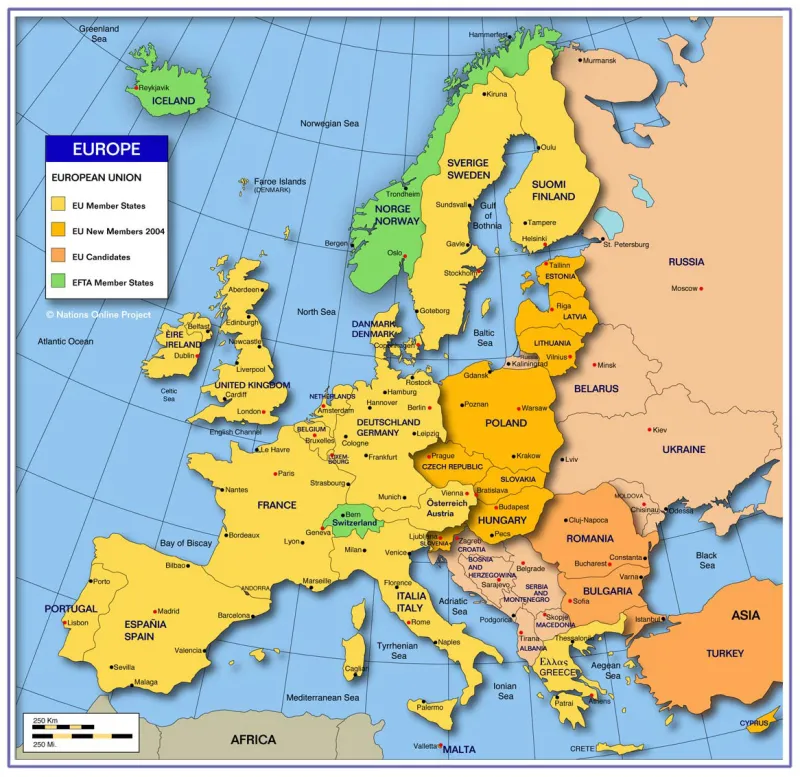
Photo: European Union packaging recycling compliance warehouse labels, via www.d.umn.edu
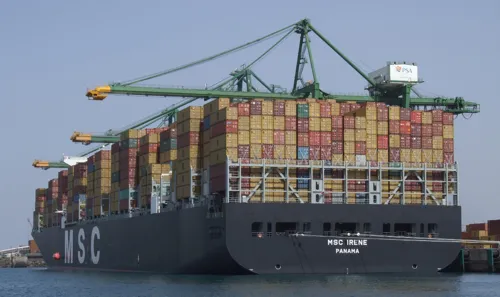
A US consumer brand enters Europe through a marketplace, ships its first pallets to a third-party warehouse in the Netherlands, and books the revenue. Six months later, invoices arrive from a German packaging compliance scheme, a French producer responsibility organization, and a tax adviser asking about marketplace VAT treatment. The brand's first instinct is to treat these as administrative surprises. They are not. They are costs that should have been in the price of the product before the first unit was sold.
The Cost That Arrives After the Sale
Extended producer responsibility, or EPR, is a policy principle that shifts the cost of managing packaging and product waste onto the entities that place those goods on the market. In Europe, it is implemented through country-level schemes that require registration, reporting, and payment of fees based on the volume and type of packaging or product placed on the market. Marketplace VAT rules add a separate layer: online marketplaces can be treated as the deemed supplier for certain sales, which changes who collects and remits VAT but does not eliminate the brand's own compliance obligations.
The timing problem is structural. A marketplace listing can go live in days. A packaging EPR registration in Germany can take weeks and requires an authorized representative for non-EU producers. A French registration requires a unique identifier and a declaration cycle. A Spanish registration follows its own schedule. The sales arrive first. The compliance cost arrives second. The margin absorbs the difference.
EPR Is Not a Registration Fee
US brands often budget for the registration and stop there. Registration is the cheapest part. The recurring cost is the fee itself, which is calculated by material type and weight. A brand that shifts from plastic to glass to meet sustainability targets may reduce its packaging weight but increase its levy if glass carries a higher fee in that country. A brand that adds a gift box for the holiday season adds packaging volume that must be declared. A brand that sells through a marketplace may have the marketplace collect some data, but the producer responsibility remains with the brand.
The operational burden is also real. Each country has its own reporting portal, its own declaration calendar, and its own definition of what counts as packaging. A US brand with a single EU distributor may assume the distributor handles it. That assumption should be tested in the contract, not in the first compliance letter.
The Deemed Supplier Does Not Absorb Your Liability
Marketplace VAT rules are frequently misunderstood in the same way. When a marketplace is treated as the deemed supplier, it may collect VAT from the customer and remit it to the tax authority. That solves a collection problem. It does not solve the brand's product compliance problem, and it does not necessarily solve the brand's EPR problem. The marketplace may require the brand to provide EPR registration numbers before allowing the listing. If the numbers are missing, the listing can be suspended, and the revenue stops while the compliance work begins.
The practical question for a US brand is not whether the marketplace collects VAT. It is who is responsible for the data, the registrations, and the declarations that sit behind the transaction. The answer is usually the brand, even when the marketplace is the deemed supplier for VAT.
Distributors Absorb Less Than You Think
A distribution agreement that is silent on EPR is not a distribution agreement that transfers EPR. In many European jurisdictions, the producer responsibility attaches to the entity that first places the packaged product on the national market. If the distributor is the importer of record, the distributor may hold the registration. But the brand may still face contractual chargebacks, marketplace requirements, or customer audits that demand proof of compliance.
The contract should state who registers, who reports, who pays the levy, and who bears the cost if a registration lapses. Without those clauses, the cost tends to migrate back to the brand after the first enforcement letter or the first marketplace suspension.
The Pricing Question
Treat EPR and marketplace VAT compliance as a cost of goods sold, not as an administrative overhead. The per-unit levy varies by country and by material, but it is estimable. The registration and reporting cost is estimable. The cost of an authorized representative is estimable. The cost of a marketplace suspension is less estimable, which is why it should be avoided rather than budgeted.
A brand that prices without these costs is not competing on efficiency. It is deferring a known cost into a future quarter, where it will appear as a margin surprise. A brand that prices with them can make a defensible decision about which countries to enter, which packaging formats to use, and which sales channels to prioritize.
A Self-Audit Checklist
Map each European country where the brand's products are sold, including marketplace sales. Identify the EPR categories that apply: packaging, electrical and electronic equipment, batteries, or other product-specific regimes. Confirm whether each registration is active and whether an authorized representative is required. Verify the marketplace VAT treatment for each channel and confirm who is responsible for the underlying data. Review distributor and marketplace contracts for EPR and VAT allocation clauses. Model the per-unit compliance cost by SKU and by country. Assign an internal owner for registration renewals and declaration deadlines.
The second invoice is not a surprise if the first price included it. For US brands selling into Europe, compliance cost is a pricing decision. The earlier it enters the model, the less it hurts.